



Art and Museums
 A Ferocious Predator of Its Day: T. Rex’s Short Arms May Have Lowered Risk of Bites During Feeding Frenzies
In a new paper appearing in the current issue of the journal Acta Palaeontologia Polonica, paleontologist Kevin Padian floats a new hypothesis: The T. rex’s arms shrank in length to prevent accidental or intentional amputation when a pack of T. rexes descended on a carcass with their massive heads and bone-crushing teeth. A 45-foot-long T. rex, for example, might have had a 5-foot-long skull, but arms only 3 feet long — the equivalent of a 6-foot human with 5-inch arms. “What if several adult tyrannosaurs converged on a carcass? You have a bunch of massive skulls, with incredibly powerful jaws and teeth, ripping and chomping down flesh and bone right next to you. What if your friend there thinks you’re getting a little too close? They might warn you away by severing your arm,” said Padian, distinguished emeritus professor of integrative biology at the University of California, Berkeley, and a curator at the UC Museum of Paleontology (UCMP). “So, it could be a benefit to reduce the forelimbs, since you’re not using them in predation anyway.” more »
 National Archives Virtual Daytime Programs in March; Celebrating Women’s History Month
One example of the programs available: Book Talk – Female Genius: Eliza Harriot and George Washington at the Dawn of the Constitution, Tuesday, March 8, at 1 p.m. ET; Register in advance; watch on the National Archives YouTube Channel; Mary Sarah Bilder looks to the 1780s — the age of the Constitution — to investigate the rise of a radical new idea in the English-speaking world: female genius. English-born Eliza Harriot Barons O’Connor delivered a University of Pennsylvania lecture attended by George Washington as he and other Constitutional Convention delegates gathered in Philadelphia. As the first such public female lecturer, her courageous performance likely inspired the gender-neutral language of the Constitution. more »
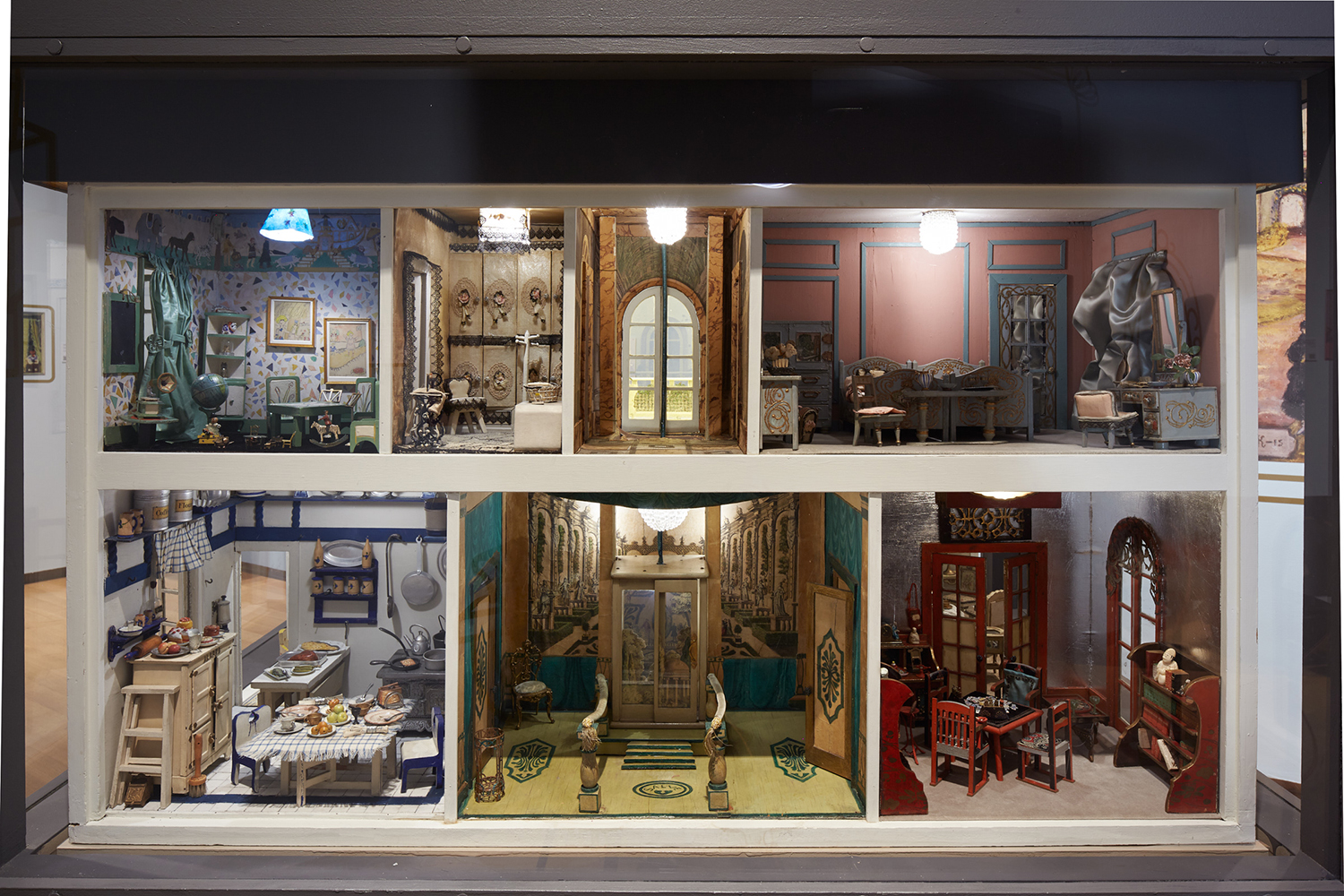 The Stettheimer Doll's House: For 19 Years, Carrie Stettheimer Worked on This Three-dimensional Work of Art
Today, the Stettheimer “doll’s house” – an artistic model made over the course of nearly two decades between 1916 and 1935 – is one of the great treasures of the Museum of the City of New York. Carrie, along with her sisters Ettie and Florine, hosted a famous artistic salon in the early 20th century, which influential art historian and critic Arthur Danto later called the “American Bloomsbury.” Ettie was a philosopher and novelist; Florine was a painter; Carrie was an aspiring theatrical designer whose artistic goals were derailed by her obligations to run the household. Her creative energies were channeled instead into the crafting of a miniature world whose interior reflected the Stettheimers’ life in their fashionable apartment and reflected the avant-garde artistic circles of New York in the 1920s. more »
 Rose Madeline Mula Writes: I’ve Got A Secret – NOT!
"I always contended that if not revealing my age would actually make me younger, I would be as tight-lipped as the enigmatic Mona Lisa; but since nothing can actually erase the years, why not just accept and admit them?... Above all, almost all my friends would submit to waterboarding before revealing their age, blissfully unaware that these days that statistic is available to anyone who makes a simple Google query or two. They don’t realize that the mere fact that they don’t know that identifies them as ancient and that exactly how ancient is no longer a secret. They believe they can guard that number to the bitter end — and beyond. No exaggeration. One woman I knew made her son vow not to put her date of birth on her headstone when she died." more »


